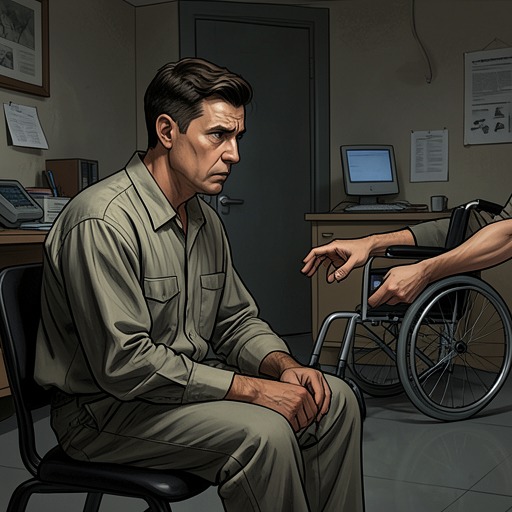
Avery Jenkins’s abandonment in the woods
Just MercyAvery Jenkins’s abandonment in the woods was a childhood act of abuse with consequences that followed him into adulthood. At ten, after being repeatedly punished and physically harmed by foster parents, Avery was taken into the woods, tied to a tree, and left there. Hunters found him three days later in very poor health. His return to foster care did not end the pattern of instability surrounding him, and the episode later became essential to understanding the life history that his trial lawyers had failed to investigate.
Early instability and abuse
Avery’s childhood had been shaped by loss and repeated displacement well before the abandonment. His father had been murdered before Avery was born, and his mother died of a drug overdose when he was one. He entered foster care at two and had lived in nineteen foster homes before turning eight. From an early age, he showed signs of intellectual disability; later assessments of his history also pointed to cognitive impairments suggestive of organic brain damage and behavioral problems suggestive of schizophrenia and other serious mental illness.
By the time Avery was ten, he was living with foster parents whose rigid rules he could not consistently meet. His inability to comply brought repeated punishment: he was locked in a closet, denied food, beaten, and subjected to other physical abuse. The abandonment followed within that household’s pattern of trying to control his behavior through deprivation and violence. When his behavior did not improve, his foster mother took him into the woods, tied him to a tree, and left him there.
The abandonment and its immediate aftermath
Avery remained in the woods for three days before hunters found him. He was in very poor health, and the consequences of being left there included serious medical problems from which he first had to recover. The woods were not a refuge or a place of chosen solitude: they were where an adult responsible for his care left a child who could not protect himself.
After Avery recovered, authorities placed him back into foster care. That decision marked the immediate institutional aftermath of the episode, but the account does not describe a stable home or lasting protection following his rescue. Instead, the abandonment sits within a childhood already marked by multiple placements and abuse, followed by his continued exposure to circumstances that adults and institutions did not adequately address.
Later consequences in Avery’s life
Avery’s difficulties continued as he grew older. By thirteen, he had begun abusing drugs and alcohol; by fifteen, he was experiencing seizures and psychotic episodes. At seventeen, he was deemed incapable of management and left homeless. These developments followed a childhood in which disability, serious behavioral and mental-health problems, and repeated abuse were documented, but not met with sustained care in the account of his life.
At twenty, during a psychotic episode, Avery wandered into a stranger’s house believing demons were attacking him. He stabbed and killed a man he believed to be a demon. His lawyers had not investigated his history before trial, and he was quickly convicted of murder and sentenced to death. The book later describes how the abandonment and other parts of his childhood became relevant to efforts to challenge that outcome: his defense contended that trial counsel had failed to uncover his history or present his disabilities as important to his culpability and sentence.
Narrative significance
The episode makes visible a form of violence that cannot be reduced to Avery’s later crime. His foster mother’s act was a concrete abandonment of a child entrusted to adult care; the rescue by hunters, medical recovery, and return to foster care did not erase the conditions that preceded it. The chronology also resists treating Avery’s adult actions as an isolated expression of character: his history included early bereavement, nineteen foster homes by age eight, physical abuse, disability, and mental illness. In the book’s account, those circumstances do not make the killing disappear; they show what the trial record left out when it presented Avery for judgment without the history that shaped his life.